
Good AI transaction alert documentation should make it possible for another reviewer to reconstruct the alert and understand what happened next. That means preserving more than the model’s flag: the case file should connect the transaction, the system’s output, the analyst’s investigation, the decision, and the evidence behind it.
An AI-generated alert is a prompt for review, not a conclusion that activity is suspicious or that a suspicious activity report (SAR) must be filed. Teams should document their own assessment and follow the requirements and policies that apply to their institution and workflow.
Build a case file that tells the whole story
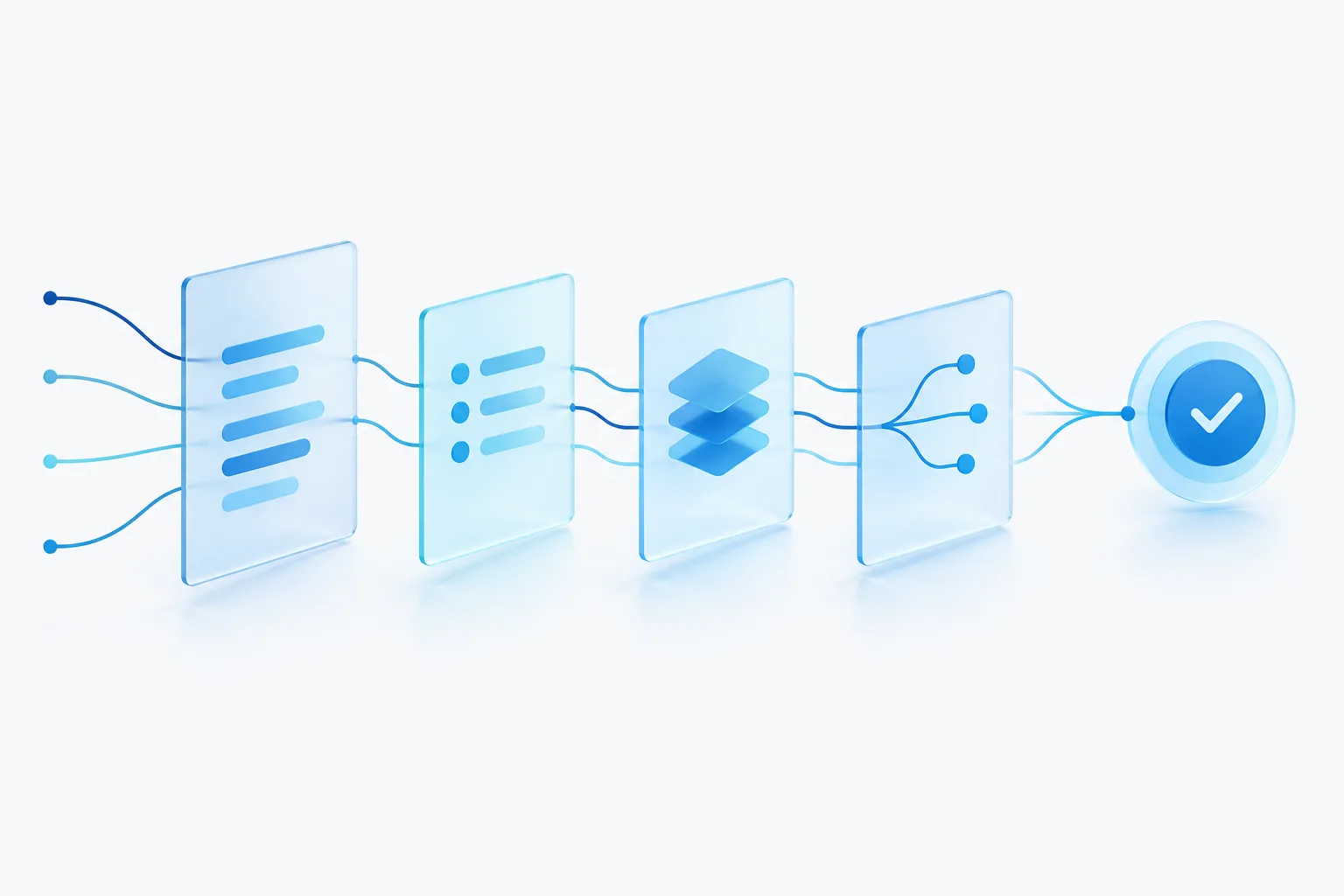
A practical transaction monitoring case file can be organized into connected records. The goal is to make the alert understandable without requiring a reviewer to guess which data, system version, or analyst decision was involved.
- Transaction facts: Identify the transaction or activity under review and preserve the relevant details as they appeared to the team. Include the source system or record reference, the event time, and any related activity that informed the review. Use a consistent time zone or identify the one used.
- Alert context: Record when the alert was generated, what it flagged, and the reason or signal shown to the analyst. Preserve the alert identifier and its link to the transaction record so the two can be found together.
- System context: Note the model or rules version, relevant configuration or threshold, and the data sources used. If the system transformed or enriched data before scoring, record enough about those steps to understand what the system received.
- Analyst investigation: Capture what the analyst reviewed, the evidence considered, and any relevant facts that supported or conflicted with the alert. Distinguish observed facts from assumptions or unresolved questions.
- Decision and follow-up: Record whether the case was closed, escalated, or sent for another review, along with the rationale, approver or reviewer where applicable, and any follow-up action.
- Linked evidence: Keep references to the records, documents, or other materials that support the analysis. Make sure a later reviewer can access the evidence or understand where it is retained.
Preserve the alert’s system context
A useful AI transaction monitoring audit trail has both event-level and system-level records. Event-level records explain one alert. System-level records help explain how the model or rules were developed, changed, tested, and monitored over time.
For an individual alert, consider preserving the model or rules version, the alert timestamp, the relevant inputs or source references, the output shown to the analyst, and any explanations the system provided. When retaining raw inputs is not appropriate, use secure references or a controlled record of the relevant fields. Avoid copying more sensitive information than the review needs.
System-level documentation can include approved changes, configuration history, testing and monitoring results, known limitations, and the intended use of the system. These records help distinguish a change in the underlying activity from a change in system behavior. The NIST AI Risk Management Framework can help teams think about documenting and managing AI risks across a system’s lifecycle; it is a framework, not a substitute for requirements that apply to a particular institution.
Document the analyst’s independent assessment
A case file should show that a person reviewed the alert rather than simply repeating its output. Analysts can record what they checked, what they found, how the evidence related to the alert, and what remains uncertain. If evidence conflicts with the alert, note that too.
When an analyst overrides, disagrees with, or does not follow an AI recommendation, document the recommendation, the action taken, and the reason. The record should make clear whether the decision came from additional evidence, a data-quality concern, a known system limitation, or another reason. If the analyst cannot resolve an issue, capture the uncertainty and how the case was routed.
These notes should be concise enough to use consistently and specific enough to be meaningful later. Avoid generic explanations such as “reviewed and cleared” when the file does not show what was reviewed or why the activity was closed.
Keep alert decisions distinct from SAR decisions
An AI flag, an analyst escalation, and a decision to file a SAR are separate stages. Document the transition between them rather than treating the alert itself as the basis for a filing decision. If a SAR is filed, preserve the supporting materials and link them to the case in a way that allows an authorized reviewer to locate them.
FinCEN guidance says that, when a financial institution files a SAR, it must retain a copy of the SAR and the original or business-record equivalent of supporting documentation for five years from the filing date (FinCEN guidance on SAR supporting documentation).
That specific guidance does not establish one universal retention period for every AI alert record or every institution. Teams should confirm which recordkeeping obligations apply to their activities and use their approved retention and access-control policies. For broader operational guidance on reviewing and routing alerts, see suspicious transaction alert triage.
Make the documentation usable in practice
Documentation only helps if staff can complete it reliably and reviewers can find the records. Use a consistent case structure with fields for transaction facts, alert context, system version, analyst notes, decision rationale, and linked evidence. Keep records access-controlled, and make sure updates do not silently replace earlier decisions or evidence.
Test the process by asking a reviewer who was not involved in the original investigation to follow the case from alert to outcome. If that person cannot identify the relevant transaction, understand the alert, or see why the analyst closed or escalated it, improve the record structure or guidance.
For a related example of defining boundaries between automated processing and human review, see how human review fits into an AI-assisted workflow.
Frequently asked questions
What information should a transaction monitoring case file contain?
At a minimum, aim to connect the transaction facts, alert output and system context, analyst investigation, decision rationale, and the evidence considered. Include references that let another authorized reviewer locate the underlying records.
Should teams record the model version and inputs behind an alert?
As a practical audit-trail measure, record the model or rules version and the relevant inputs or source references used for that alert. Also capture the output presented to the analyst and any relevant configuration or threshold.
How should analysts document why they escalated or closed an alert?
Record the evidence reviewed, what supported or conflicted with the alert, the analyst’s conclusion, and the reason for the next step. Note unresolved questions and the route for follow-up when needed.
What if an analyst overrides an AI recommendation?
Document what the system recommended, what the analyst decided, and the reason for the difference. Include relevant evidence, data concerns, or system limitations that informed the decision.
Conclusion
A strong alert record connects the transaction to the system output, the analyst’s independent reasoning, the final decision, and the evidence supporting it. Review your current case-file process against this checklist, then contact Zevonix at (904) 658-0777 if you want to discuss documenting or improving an AI-enabled workflow.